
How to Keep Presenters Comfortable Before They Walk Onstage
Presenter confidence starts before the first word is spoken. Learn how thoughtful production support helps speakers feel prepared, comfortable, and ready before they step onstage.
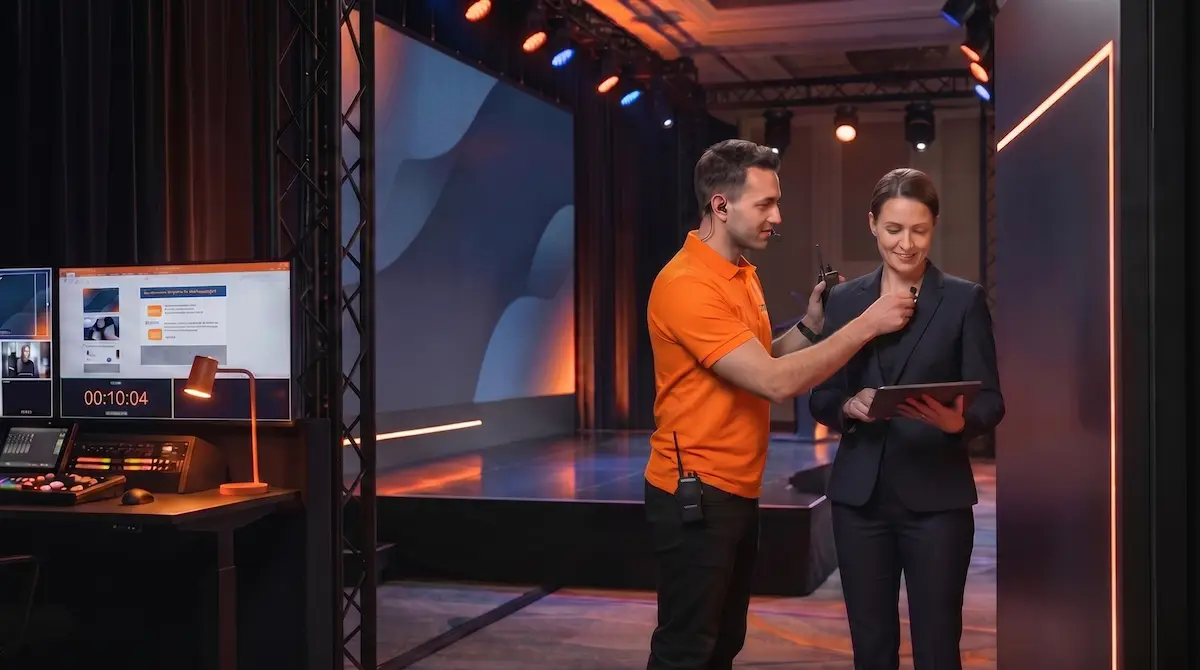
A strong presenter does more than deliver information. They set the tone for the room, represent the brand, and often carry the most visible part of the event. But even experienced speakers can feel pressure in the minutes before they walk onstage.
That is why presenter comfort is not a minor detail. It is part of the production strategy.
At Outta Time Productions, we believe the best live events are not just technically sharp. They also make speakers feel prepared, supported, and confident before the first cue is called. When presenters know what to expect, the delivery becomes smoother, the event feels more polished, and the planning team has one less thing to worry about.
Confidence Starts Before the First Cue
Most presenter stress does not come from speaking itself. It comes from uncertainty.
Will the slides display correctly?
Will the microphone sit comfortably?
Will the clicker work?
Where do they enter?
What happens if they need to skip ahead?
Can they see their notes?
Who do they look to if they need help?
These are small questions, but if they are left unanswered, they create friction fast. In a live environment, friction shows up onstage.
A prepared speaker feels different in the room. They walk with more confidence. They settle in faster. They trust the process. That confidence shapes the audience experience just as much as the visuals, lighting, or sound.
Slide Checks Reduce Last-Minute Anxiety
One of the fastest ways to reduce presenter stress is to review content before the session begins.
A proper slide check is not just about confirming the file opens. It is about making sure the speaker knows how the content will appear on screen, whether animations behave as expected, and whether any embedded video or media will play correctly. It is also the right time to confirm naming, order, and any changes made after the original submission.
This matters because many speaker nerves come from wondering whether the screen will support them or surprise them.
If last-minute updates do happen, they should be handled through a calm, organized process. We covered that more deeply in Handling Last-Minute Production Changes, but the goal is always the same: remove uncertainty before the presenter reaches the stage.
Microphones and Clickers Should Never Feel Like a Mystery
Presenters should not be learning how to wear a lavalier or use a clicker in front of an audience.
Before the session begins, they should know:
- what microphone they are using
- how it is positioned
- where to clip or hold it
- how the clicker advances slides
- who to look toward if something needs adjustment
These details may seem simple, but they directly affect comfort. A speaker who is distracted by an awkward microphone or unfamiliar clicker is dividing attention between the message and the mechanics. That tension is visible.
A good production team removes that distraction early. The equipment should feel like an extension of the presentation, not an obstacle inside it.
Stage Orientation Builds Confidence Fast
Even a quick stage orientation can make a major difference.
Presenters should know:
- where they enter
- where they stand
- what confidence monitor or screen they can reference
- where the audience sightlines are
- where the timer or cue point is
- how they will exit when the session ends
When a presenter understands the physical space, the room stops feeling unpredictable. They can focus on delivery instead of figuring things out in real time.
This is especially important in larger rooms, general sessions, and environments with multiple screens or a more complex live event production setup. The bigger the stage, the more valuable clarity becomes.
Confidence Monitors and Visual Support Matter
A confidence monitor is not just a technical extra. It is a comfort tool.
When used well, it gives presenters an immediate sense of control. They can reference slides, track their place, and stay oriented without awkwardly turning toward the main screen. For speakers who rely on visuals or need reassurance during high-stakes moments, that support can dramatically improve comfort.
The same goes for previewing stage visuals, understanding where branding appears, and knowing what the audience is seeing in the room. The less mystery there is, the more natural the presentation becomes.
Backstage Communication Should Feel Calm and Clear
A presenter’s final minutes before walking onstage should not feel chaotic.
They should know:
- how much time remains
- when they are being called forward
- whether the session before them is on time
- who will cue them into position
- whether any updates have changed their entry or pacing
This is where calm backstage communication matters. A well-supported speaker does not need to chase answers. The answers come to them clearly and at the right time.
That is one of the biggest differences between a reactive show environment and a controlled one. Strong production support makes the backstage experience feel steady, even when timing shifts or the room is moving quickly.
Rehearsal Is Not About Perfection. It Is About Familiarity.
Not every event has time for a full technical rehearsal, but even a short run-through can improve presenter comfort significantly.
A quick rehearsal helps speakers:
- hear their own microphone
- see their slides on the screen
- test the clicker
- feel the stage layout
- understand the timing
- practice entrance and exit flow
The goal is not to force a perfect performance. The goal is to make the environment familiar enough that the presenter can focus on communication instead of mechanics.
This is one reason production support inside a hotel ballroom should go beyond basic AV coverage. As we touched on in Corporate Event Production vs. Hotel AV, technical execution becomes more valuable when it actively supports the people onstage, not just the equipment in the room.
Presenter Comfort Improves the Entire Event
When presenters feel comfortable, the benefits spread well beyond the stage.
The planning team gets fewer emergencies.
The audience gets a smoother session.
Transitions feel more polished.
The event brand looks stronger.
The room feels more controlled.
Comfort is not just a speaker issue. It is a show-quality issue.
That is why presenter support should be treated as part of the event system, not a last-minute courtesy. It is a key piece of how a production team helps the entire event perform better.
The Best Support Often Feels Invisible
The strongest presenter support is often the least visible to the audience.
It shows up in the microphone that fits correctly.
The slide deck that is ready.
The confidence monitor placed where it should be.
The cue delivered at the right moment.
The technician backstage who answers a question with calm confidence.
The smooth walk-on that feels effortless from the audience’s perspective.
That kind of support does not happen by accident. It comes from a team that understands live events as both a technical environment and a human one.
At Outta Time Productions, we build that support into the process. From live events to hybrid events and video production, our goal is not just to keep the show running. It is to help every person involved step into it with confidence.
If you are planning an upcoming event and want a production team that supports both the show flow and the people onstage, contact our team.
A confident presenter does not happen by accident. It happens when the room, the crew, and the cue all work together before the first word is spoken.