
How to Turn a Corporate Event Into Post-Event Content
A corporate event does not have to end when the room clears. Learn how to plan event recordings, recap videos, executive clips, and follow-up content before show day.
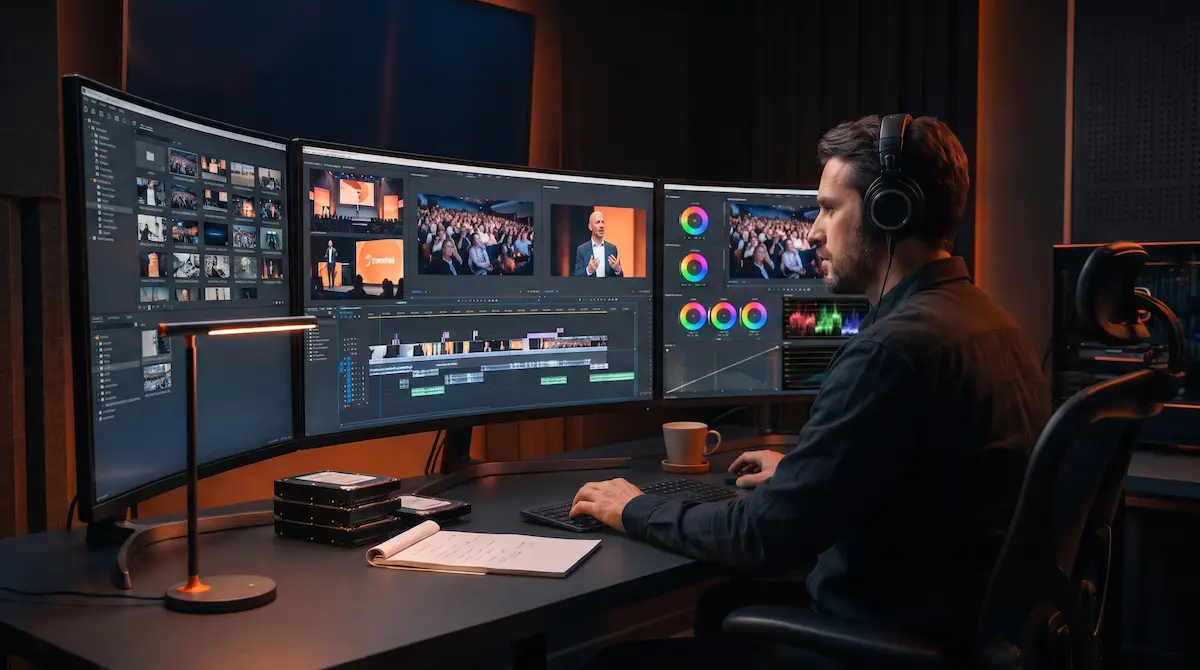
A corporate event does not have to end when the room clears.
The keynote, leadership message, panel discussion, awards segment, product announcement, training session, or company update may have value long after the final slide. But that value is often lost because post-event content is treated as an afterthought.
Someone may ask for a recording at the last minute. A camera may be added without a clear plan. Audio may not be captured cleanly. The lighting may be built for the room, but not for video. The best moments may happen without anyone knowing they should be saved.
That is why post-event content should be part of the production conversation before show day.
At Outta Time Productions, we help clients think beyond the live moment. A strong corporate event can support the audience in the room, the people watching remotely, and the people who need the message after the event is over.
Why Post-Event Content Matters
Corporate events take time, budget, planning, speakers, travel, design, coordination, and production support.
That effort should not disappear after one day.
Post-event content can help extend the value of the event by turning key moments into assets your company can use again.
That may include:
- recap videos
- executive message clips
- internal communication videos
- sponsor highlights
- training content
- social media clips
- sales enablement content
- recruiting content
- client update videos
- leadership announcements
- panel discussion excerpts
- conference highlight reels
The event may happen once, but the content can keep working afterward.
Start With the Purpose of the Content
Before deciding what to record, decide what the content needs to do.
Not every event needs the same post-event content plan.
A leadership meeting may need clean executive clips for internal communication. A sales kickoff may need recap content that builds energy across the company. A client event may need highlight clips for marketing. A training session may need full-session recordings that can be shared with teams later.
Start by asking:
- Who needs to see this after the event?
- What message should they remember?
- Where will the content be used?
- Does the content need to be internal, public, or both?
- Do we need full recordings, short clips, or a recap video?
- Are there sponsor, client, or leadership moments that need to be captured?
- How quickly does the content need to be delivered?
These questions help shape the production plan before cameras are placed or files are recorded.
Recording Is Not the Same as Creating Content
There is a difference between recording an event and producing useful content from an event.
A basic recording may document what happened. That can be helpful, but it may not be polished enough for marketing, executive communication, training, or public use.
Post-event content requires more intention.
That includes camera placement, clean audio feeds, lighting choices, framing, slide capture, speaker timing, file organization, and a plan for what happens after the event.
If the goal is only archive documentation, a simple recording may be enough.
If the goal is usable content, the recording strategy needs to match the final deliverable.
That is where video production and live event production need to work together.
Plan the Capture Before Show Day
The best post-event content starts before the event begins.
If you wait until show day to decide what should be captured, important details may already be missed.
A production team should know:
- which sessions need to be recorded
- which speakers are most important
- whether slides need to be captured
- whether audience questions should be included
- whether the content will be edited later
- whether short clips are needed for social media
- whether the final content is internal or public
- whether sponsor or partner moments need coverage
- whether branding needs to appear in the final edit
- whether release forms or approvals are needed
This helps the live event team protect both the in-room experience and the content needs after the event.
Capture Clean Audio First
If the audio is bad, the content is difficult to use.
A video can survive a less-than-perfect camera angle. It is much harder to fix unclear speech, room echo, low microphone levels, audience noise, or missing audio feeds.
That is why post-event content should begin with a clean audio plan.
For corporate events, that may include:
- direct audio feeds from the microphones
- backup audio recording
- proper microphone selection
- clean panel audio
- audience Q&A capture
- playback audio capture
- separate audio routing for recording or streaming
- monitoring during the event
This matters for recap videos, full-session recordings, training content, executive clips, and hybrid events.
Good content starts with clear sound.
Think About Camera Placement
Camera placement affects how professional the final content feels.
For a simple documentation recording, one camera may be enough. For more polished content, the event may need multiple camera angles, tighter speaker shots, audience reactions, wide room coverage, or dedicated camera support.
A production team may consider:
- where the presenter will stand
- whether the camera has a clean sightline
- whether the room layout blocks the shot
- whether the screen content needs to be visible
- whether audience reactions matter
- whether the shot works for both recording and livestream
- whether lighting supports the camera angle
- whether the camera position affects the audience experience
This should be planned with the room layout, not added after the room is already built.
Build the Event With Editing in Mind
Post-event content becomes easier when the event is captured with editing in mind.
That means thinking about what the editor will need later.
For example, a recap video may need room shots, audience reactions, stage moments, speaker close-ups, sponsor signage, registration, networking, applause, and branded visuals.
An executive message clip may need clean audio, a steady camera angle, proper lighting, and a simple way to match slides or graphics.
A training video may need full-session capture, clear slide visibility, usable audio, and organized file delivery.
When the production team knows the final use, they can capture the right material instead of only recording what happens from one angle.
Use the Event to Create Multiple Assets
One corporate event can become more than one piece of content.
A single event may support:
- one full event recording
- one recap video
- three executive clips
- five short social media clips
- sponsor highlight content
- internal training videos
- customer testimonial clips
- a post-event email video
- website content
- sales follow-up material
This is where the event budget can work harder.
Instead of treating the event as one live moment, the company can treat it as a content source.
That does not mean every event needs a full media package. It means the content opportunities should be considered before the production plan is finalized.
Protect the Live Experience First
Post-event content matters, but it should not hurt the live event.
Cameras should not block sightlines. Lighting should not make the room uncomfortable. Recording needs should not distract speakers. Crew movement should not interrupt the audience experience.
The live event still comes first.
A strong production partner knows how to balance both needs. The goal is to capture content without making the room feel like a film set unless that is the intended style.
That balance is important for corporate events, leadership meetings, awards dinners, investor updates, and client-facing programs.
Align the Content Plan With the Show Flow
The best content moments often happen during specific parts of the event.
That may include:
- opening remarks
- keynote messages
- executive announcements
- product reveals
- sponsor moments
- awards presentations
- audience reactions
- panel discussions
- closing remarks
- networking moments
If the production team knows the show flow, they can be ready for the moments that matter.
As discussed in What Happens Behind the Scenes During a General Session, the success of a corporate event depends on coordination before the audience sees the result. The same is true for post-event content.
The capture plan should follow the structure of the show.
Do Not Wait Until the End to Ask for Clips
One common mistake is asking for clips after the event without planning for them before the event.
That can create problems.
The recording may not have the right angle. The audio may not be isolated. The slides may not be captured cleanly. The file may be too long and difficult to review. The best moments may not be marked or noted.
If clips are important, plan for them early.
A production team can help identify likely clip moments, mark key sections, organize files, and capture the event in a way that supports the final edit.
That makes the post-event process smoother.
Post-Event Content Supports Hybrid and Remote Audiences
Post-event content is especially useful when not everyone can attend live.
A hybrid event may have remote attendees watching in real time, but there may also be employees, clients, members, or partners who need access later.
Content can help extend the reach of the event beyond the original audience.
That may include:
- full-session replays
- edited highlight videos
- executive updates
- department-specific clips
- training modules
- client recap content
- internal announcement videos
For hybrid events, content planning can help bridge the gap between the live audience, the remote audience, and the people who watch later.
Make File Delivery Part of the Plan
Post-event content is not finished just because the event was recorded.
Someone needs to know what files are being delivered, when they are needed, how they will be organized, and who needs access.
A simple delivery plan may include:
- raw recording files
- edited recap video
- short clips
- audio files
- slide capture
- file naming
- delivery timeline
- approval process
- usage notes
- storage location
Without a delivery plan, content can become disorganized quickly.
A professional production partner can help define what is being captured and how it will be handed off after the event.
Know What Needs Approval
Corporate content often needs approvals before it can be shared.
That may include approval from leadership, communications, marketing, legal, sponsors, speakers, or clients.
If post-event content will be used publicly, the approval process matters even more.
Planners should consider:
- speaker permissions
- sponsor usage
- audience visibility
- confidential information
- internal-only content
- public-facing clips
- branded graphics
- final review timelines
These questions are easier to handle before the event than after the content has already been captured.
A Production Partner Can Help You See the Bigger Picture
The value of post-event content is not just in the recording.
It is in the plan.
A production partner can help connect the live event, the recording strategy, the content goals, and the final deliverables. That makes the event more useful after the room clears.
At Outta Time Productions, we support clients who want their events to do more than happen once. From live event production and hybrid event support to recording, video capture, and post-event content planning, our goal is to help companies turn important moments into content they can actually use.
If you are planning a corporate event and want to capture more value from the production, contact our team before the event plan is locked.
A corporate event is more than a moment in the room. With the right plan, it becomes a message your audience can revisit, share, and act on long after the lights come down.