
Why Backup Plans Are Part of Professional Event Production
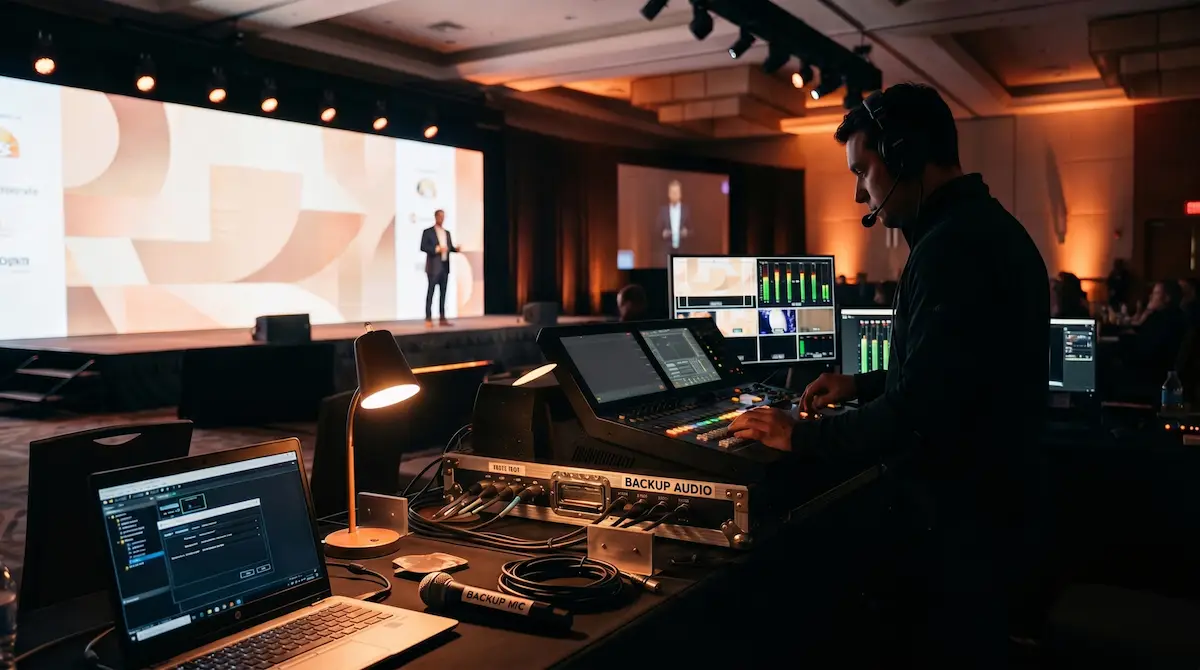
Professional event production is not just about the primary plan. It is about having backup systems ready so the show can keep moving when conditions change.
A professional event is built on trust.
The planner trusts the schedule.
The presenters trust the room.
The audience trusts the experience.
The client trusts that every important moment will happen the way it was planned.
But live events do not happen in perfect conditions. Files change. Microphones fail. Internet drops. Laptops freeze. Timelines shift. A presenter walks onstage with an updated deck. A video that worked yesterday suddenly does not play correctly today.
That is why backup plans are not optional in professional event production.
They are part of the system.
At Outta Time Productions, we believe a strong production plan is not just about what should happen. It is also about what happens if something changes. Backup workflows help protect the event from avoidable disruption, giving the planning team more confidence and the audience a smoother experience.
Backup Plans Are Not a Sign of Weakness
Some people think backup planning means expecting failure.
It does not.
Backup planning means respecting the reality of live production. The more important the event, the more valuable it becomes to have options ready before they are needed.
A professional production team does not wait until something breaks to start thinking. They build the show with layers of support already in place.
That may include backup playback systems, spare microphones, redundant adapters, secondary internet options, alternate signal paths, extra cables, duplicate media files, printed run of show notes, or a clear communication plan if timing changes.
The goal is simple: keep the show moving without making every issue visible to the room.
Redundancy Helps Protect the Moments That Matter
Every corporate event has moments that carry more weight than others.
The opening video.
The CEO keynote.
The award announcement.
The sponsor recognition.
The investor update.
The livestream segment.
The closing message.
These moments deserve more than a single point of failure.
If a laptop is the only playback source, that is a risk. If one microphone is the only option for a keynote speaker, that is a risk. If the internet connection has no backup plan during a hybrid event, that is a risk.
Professional production looks at those critical moments and asks: what needs to be protected?
That question shapes the technical plan. It also helps the event planner understand where backup support matters most.
Backup Playback Keeps Content Moving
Presentation and video playback are some of the most common pressure points in corporate events.
Slide decks may arrive late. Videos may be exported in the wrong format. Embedded media may not behave the same on every machine. A presenter may bring an updated file right before walking onstage.
A backup playback plan helps reduce that risk.
That can mean having duplicate files ready, a secondary playback machine prepared, backup adapters available, and a clean intake process for last-minute updates. It also means testing content before it becomes part of the live show flow.
This connects directly to how production teams handle unexpected changes. As discussed in Handling Last-Minute Production Changes, the best response is not panic. It is a controlled workflow that keeps the show aligned.
Spare Microphones Are More Than Extra Gear
Audio issues are instantly noticeable.
A screen can go dark for a moment and some attendees may miss it. But when a microphone cuts out, everyone knows.
That is why spare microphones are a basic part of professional event readiness. A backup handheld, extra lavalier, fresh batteries, alternate cable, or secondary input can make the difference between a small adjustment and a visible disruption.
This matters even more for executive remarks, panels, awards segments, and audience Q&A. Those moments depend on clear audio and confident delivery.
The presenter should not have to think about the microphone. The planning team should not have to wonder whether there is another option. A production partner should already have the backup path ready.
Internet Backup Matters for Hybrid Events
Hybrid events add another layer of risk because the audience is not only in the room.
Remote viewers depend on a stable feed, clean audio, clear video, and a connection that holds. If the internet drops and there is no backup plan, the online audience may lose the most important part of the event.
For hybrid events, backup planning may include secondary internet, hotspot options, bonded connections, backup encoders, local recording, or a communication plan for remote attendees if the feed needs to recover.
The exact setup depends on the size and importance of the event. But the principle stays the same: if the stream matters, the backup plan matters.
Hybrid production works best when the online audience is treated as part of the event, not an afterthought. That is one reason contingency planning should happen before the room goes live.
Backup Plans Support Presenter Confidence
Backup plans are not only about equipment. They also support the people onstage.
Presenters feel more comfortable when they know there is a plan if something goes wrong. If the clicker fails, there is a backup. If a slide does not advance, someone is watching. If a microphone needs adjustment, the team is ready. If they skip ahead, the crew can follow.
That kind of readiness helps reduce speaker anxiety.
Presenter support is a major part of the event experience. In How to Keep Presenters Comfortable Before They Walk Onstage, we covered how preparation, stage orientation, and technical clarity help speakers feel ready. Backup planning is part of that same support system.
A confident presenter does not need to know every technical detail. They just need to know the room is ready for them.
Communication Is Part of the Backup Plan
A backup plan is only useful if the team knows when and how to use it.
That is where communication matters.
If a microphone fails, who makes the call to switch?
If a video does not play, who cues the alternate source?
If the schedule changes, who updates the run of show?
If the stream has an issue, who communicates with the client?
If a presenter changes direction, who adjusts the next cue?
These answers should not be figured out in the middle of the event.
Professional production depends on clear roles, headset communication, show calling, and a shared understanding of priorities. Backup systems need people who can activate them calmly and quickly.
The equipment matters. The communication around it matters just as much.
Not Every Backup Plan Has to Be Complicated
Backup planning does not always mean building a massive technical system.
Sometimes it is simple.
A spare laptop.
A second copy of the deck.
An extra microphone.
A printed script.
A local recording.
A backup cable.
A second adapter.
A clear contact list.
A tested file before doors open.
Small preparations can prevent major disruption.
The key is knowing which details matter most for the specific event. A leadership meeting, awards dinner, product launch, town hall, hybrid broadcast, and corporate video shoot do not all require the same backup plan. But they all benefit from intentional thinking before the show starts.
Backup Planning Is Part of Being a Production Partner
A vendor may bring what was ordered.
A production partner thinks about what the event may need if the plan changes.
That distinction matters. Backup planning is one of the clearest signs that a production team is thinking beyond the equipment list. They are thinking about the event experience, the people involved, the client’s goals, and the pressure on the planning team.
As we discussed in The Difference Between a Vendor and a Production Partner, a true production partner helps carry the weight of the show before the first cue is ever called.
Backup planning is part of that weight.
It is quiet work. Most attendees never see it. But when something changes, that preparation becomes the difference between a problem and a controlled adjustment.
The Best Backup Plan Is the One the Audience Never Notices
When backup planning works, the audience may never know it happened.
A microphone is swapped smoothly.
A video plays from the alternate machine.
A stream recovers without panic.
A presenter keeps moving.
A timing change is absorbed.
A file update gets handled without disrupting the room.
That is the point.
Professional event production is not about pretending nothing can go wrong. It is about building a system that can respond when something does.
At Outta Time Productions, we plan for the show you expect and prepare for the variables that live events can bring. From live events to hybrid events and video production, our goal is to help your event stay polished, controlled, and ready for the moments that matter.
If you are planning a corporate event and want a production team that thinks beyond the primary plan, contact our team.
The strongest backup plan is rarely seen by the audience. It is felt in the confidence of a show that keeps moving when the unexpected appears.