The Future of Hybrid Events: Better Audio, Better Cameras, Better Remote Experience
Hybrid events are moving beyond basic livestreams. Learn how better audio, camera planning, remote presenter support, and technical strategy create a stronger experience for every audience.
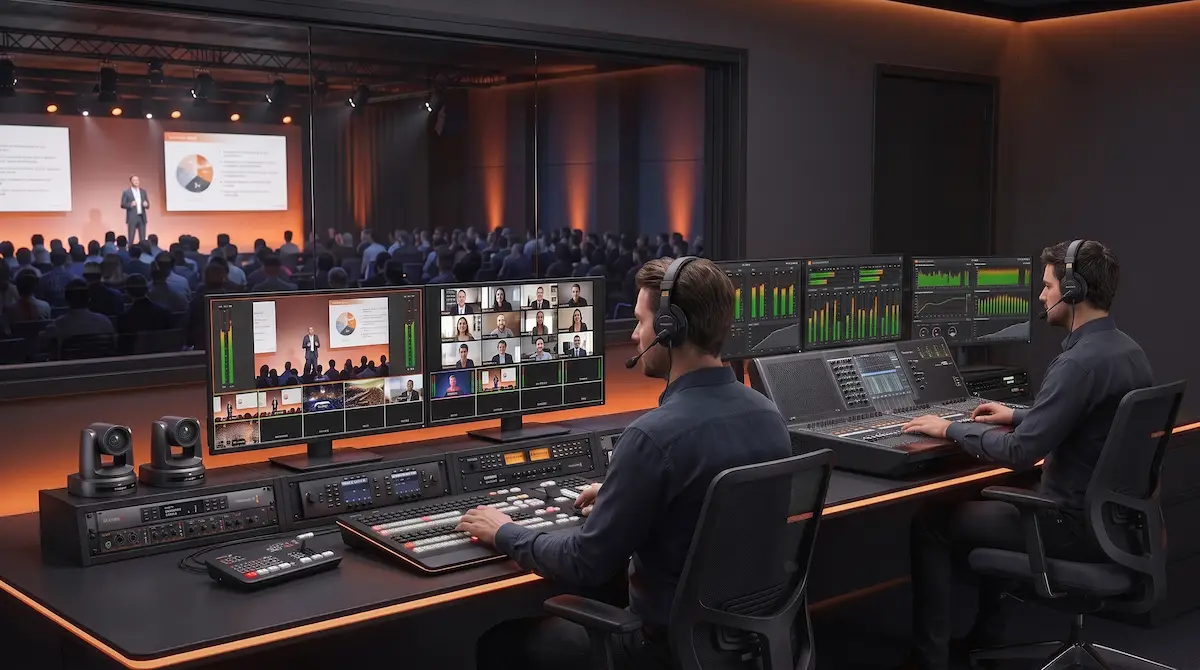
Hybrid events are no longer just a camera in the back of the room.
That may have been enough when companies were trying to quickly connect remote viewers to an in-person event. But expectations have changed. Remote attendees now expect clear audio, better camera angles, readable content, stable streaming, smooth remote presenter support, and an experience that feels intentional.
The future of hybrid events is not only about being online.
It is about making the remote audience feel considered.
For corporate events, leadership meetings, sales kickoffs, investor updates, training programs, and association meetings, hybrid production needs to support both audiences at the same time. The people in the room need a polished live experience. The people watching remotely need a clear, professional, and easy-to-follow experience.
At Outta Time Productions, we see hybrid as a production strategy, not just a livestream link. The technology matters, but the plan behind the technology matters even more.
Hybrid Events Are Becoming More Intentional
A basic livestream can show people what is happening in the room.
A strong hybrid event helps remote viewers understand, follow, and feel connected to what is happening.
That is a major difference.
The old hybrid approach often looked like this:
- one camera at the back of the room
- room audio sent to the stream
- slides shown when available
- little or no remote audience interaction
- limited monitoring of what remote viewers are seeing
- no clear plan for remote speakers
- no backup if the stream or internet fails
That approach may technically put the event online, but it does not always create a strong remote experience.
Modern hybrid production needs to think about the online audience from the beginning. That includes audio, camera placement, content routing, speaker support, stream monitoring, remote participation, and backup planning.
Audio Is Still the Most Important Part of Hybrid
If remote viewers cannot hear clearly, the event does not work.
Poor audio makes a hybrid event feel unprofessional faster than almost anything else. Viewers may forgive a simple camera angle, but they are much less forgiving when they cannot understand the speaker, hear the panel, follow audience questions, or listen without distractions.
Hybrid audio needs more than just microphones in the room.
A strong audio plan may include:
- clean microphone feeds
- proper gain structure
- dedicated audio routing for the stream
- audience Q&A capture
- playback audio capture
- remote presenter audio return
- monitoring for the online feed
- backup microphones
- clear separation between room audio and stream audio when needed
The in-room sound and the online sound are connected, but they are not always the same mix.
The room may need reinforcement so the audience can hear. The stream may need a cleaner broadcast-style mix so remote viewers can follow every word. That difference matters.
Better Cameras Create a Better Remote Experience
A hybrid event should not feel like a security camera view of the ballroom.
Camera placement changes how remote attendees experience the event.
A wide shot can show the room, but it may not be enough for a keynote, panel, award segment, or executive presentation. Remote viewers often need closer shots, better framing, and camera movement that helps them stay connected to the speaker.
Depending on the event, the camera plan may include:
- a wide room shot
- a close speaker shot
- panel coverage
- audience reaction shots
- stage walk-up shots
- sponsor or branding moments
- a dedicated camera for remote-friendly framing
- camera switching for more polished delivery
The goal is not to overproduce every event. The goal is to choose camera support that matches the importance of the message.
A leadership update may only need a clean single-camera setup with strong audio. A larger general session may need multiple cameras and live switching. A client-facing event may need a more polished broadcast-style approach.
Remote Viewers Need Readable Content
Slides that look fine in the room may not always work online.
Small text, crowded charts, detailed spreadsheets, wide-format graphics, and low-contrast designs can be difficult for remote viewers to follow. If the remote audience cannot read the content, the message loses impact.
Hybrid events should consider how content will appear in the stream.
That may include:
- direct slide capture
- picture-in-picture layouts
- separate speaker and slide views
- larger font sizes
- simplified graphics
- proper aspect ratio
- readable lower thirds or speaker labels
- content testing before the event
This is why hybrid production should be discussed before the final deck is finished.
The technical plan and the content plan should work together.
Remote Presenters Need Their Own Support Plan
Remote presenters can be one of the hardest parts of a hybrid event.
They are not in the room, but they still need to feel like part of the show.
A remote presenter may need help with:
- connection testing
- camera framing
- microphone quality
- lighting
- background
- slide control
- timing
- return audio
- confidence monitoring
- cueing
- backup access
- what to do if their connection fails
Without a plan, remote presenter segments can feel awkward or risky.
The production team should know how the remote presenter will join, who cues them, how they hear the room, how the room hears them, how their video appears on screen, and what happens if something goes wrong.
Remote presenters should not be treated like a last-minute video call. They should be part of the show flow.
Stream Monitoring Is Not Optional
One of the biggest mistakes in hybrid events is assuming the stream is fine because the room sounds fine.
The in-room experience and the online experience are not the same.
A professional hybrid event should include someone monitoring what remote viewers are actually seeing and hearing. That means checking audio levels, video quality, slide visibility, stream health, and whether the online feed matches the intended experience.
Stream monitoring can help catch issues such as:
- audio too low or too loud
- missing playback audio
- unreadable slides
- camera framing problems
- stream lag
- unstable internet
- incorrect source routing
- remote presenter issues
- muted microphones
- poor transitions between content sources
If no one is monitoring the remote experience, the production team may not know there is a problem until viewers start messaging the organizer.
That is too late.
Hybrid Events Need a Backup Plan
Hybrid adds more points of failure than a standard in-room event.
That does not mean hybrid is unreliable. It means the production plan needs to account for more moving pieces.
A hybrid backup plan may include:
- backup internet options
- backup streaming destination
- backup recording
- spare microphones
- backup playback machines
- alternate remote presenter access
- local copies of remote presenter slides
- phone audio backup
- backup camera option
- a plan for communicating with remote attendees if something changes
As discussed in Why Backup Plans Are Part of Professional Event Production, the audience may never see the backup plan. But the production team should know what happens if something fails.
Hybrid events reward preparation.
The Room Still Matters
A better remote experience does not mean the room matters less.
The in-person audience still needs clear sound, good sightlines, strong pacing, readable screens, proper lighting, and a show flow that feels organized.
The challenge is that hybrid production has to serve both audiences at once.
A choice that works for the room may not automatically work for the stream. A camera position may be great for online viewers but disruptive for people onsite. Lighting may look good in person but not on camera. Audio may sound fine in the room but unclear online.
That is why hybrid events need a production partner who understands both live event support and broadcast-style thinking.
Hybrid Should Be Designed Around the Audience
Not every hybrid event needs the same setup.
The right approach depends on who is watching, what they need, and how important the remote experience is.
A simple internal update may need clean audio, a camera, and reliable stream access.
A national sales meeting may need multiple cameras, remote presenter support, breakout access, recordings, and post-event clips.
A client-facing hybrid event may need a more polished production style with stronger branding, cleaner transitions, and higher-quality video.
A training event may need clear slide capture, organized recordings, and easy access for people who watch later.
The point is not to add technology just because it is available.
The point is to design the hybrid experience around the audience.
Hybrid Events Create Post-Event Value
A strong hybrid event can also become useful content after the event ends.
Because the event is already being captured, companies can often create recordings, recap videos, executive clips, training segments, internal updates, or client follow-up content.
But that only works well if it is planned early.
As discussed in How to Turn a Corporate Event Into Post-Event Content, recording is not the same as creating useful content. If post-event clips, session recordings, or internal communication videos matter, the capture plan should be built before show day.
Hybrid production and content strategy should work together.
The Future of Hybrid Is More Human, Not Just More Technical
The future of hybrid events is not only about better gear.
It is about better communication, better planning, and better support for everyone involved.
Remote attendees need to hear clearly, see clearly, and understand where to focus. Presenters need to feel confident whether they are in the room or joining from somewhere else. Planners need to know the stream is being monitored. The production team needs to understand the full flow of the event, not just the equipment list.
Better audio matters.
Better cameras matter.
Better remote support matters.
But the real improvement comes from treating hybrid as part of the event strategy from the beginning.
A Production Partner Can Make Hybrid Feel Intentional
Hybrid events work best when they are planned as hybrid events from the start.
That means thinking through the in-room audience, the remote audience, the presenters, the content, the stream, the recording, and the backup plan before show day.
At Outta Time Productions, we support corporate hybrid events with the goal of making both audiences feel considered. From hybrid event production and live event support to recording, camera planning, stream coordination, and post-event content strategy, we help companies build events that feel polished in the room and clear online.
If you are planning a hybrid event and want the remote experience to feel stronger than a basic livestream, contact our team before the production plan is locked.
The future of hybrid events is not just about connecting the room to the internet. It is about connecting every audience to the message with clarity, confidence, and intention.